

About the Early Career Training Programme (ECTP) for Early Career Teachers (ECTs)
The Five Counties Teaching School Hub Alliance is working with the education development trust (EDT) to deliver the full ECTP Programme. The programme is free for all state funded schools in the Five Counties Hub region.
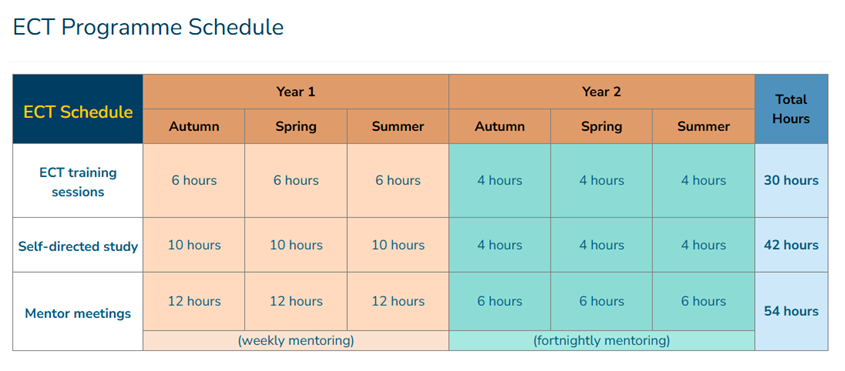
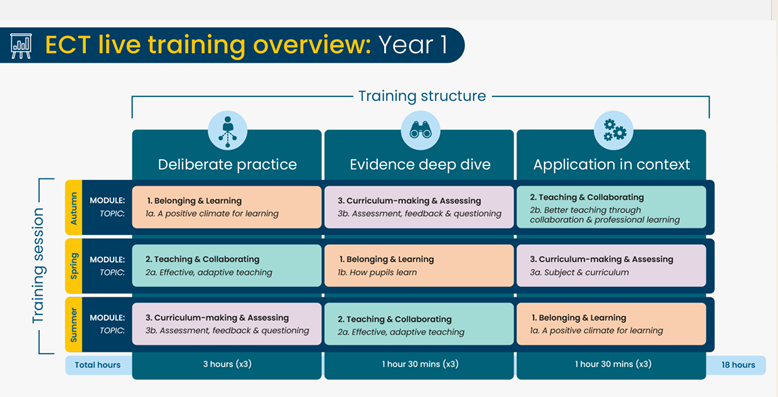
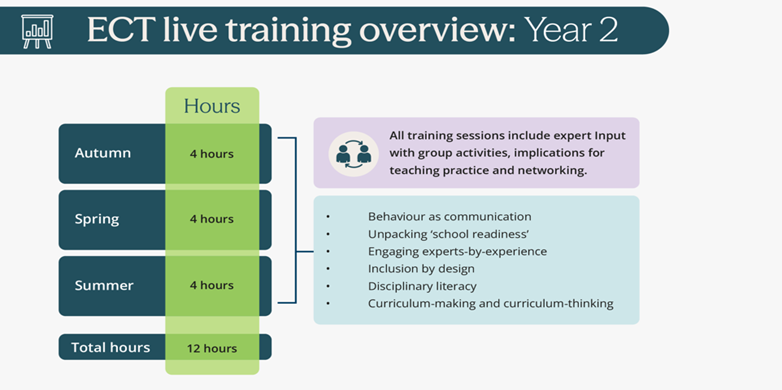
The Full ECF ECTP programme takes 24 months to complete. Over the course of the Early Career Training Programme, ECTs will work through 6 modules in total, 3 in their first year and 3 in their second. These modules comprise of a blend of face-to-face training (year 1), virtual or face to-face training sessions (year 2), self-study, and weekly (year 1) and fortnightly (year 2) 1:1 mentoring sessions.
How to RegisterEach Module on the ECTP Programme will include:
- Self-directed study materials: Interactive self-study materials using an online platform which explain the research behind the ECTP and exemplifications of what this looks like in the classroom.
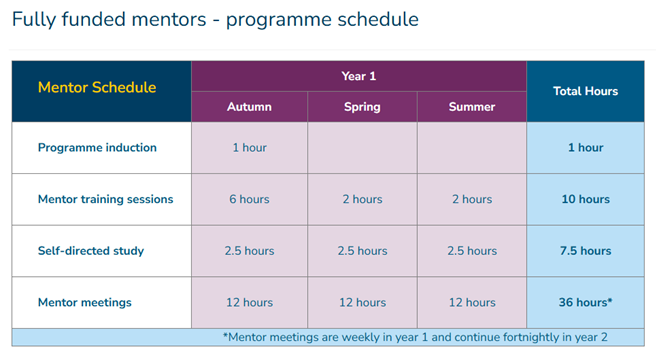
- Mentor Sessions: One to one sessions with ECTs, to help translate the research into their own practice and reflect on their learning and development. These sessions are based on an instructional coaching model. Mentor Meetings are weekly in Year 1 and then fortnightly meetings in Year 2.
- Training Sessions: Group sessions delivered face-to-face in Year 1 and then online in Year 2, to explore the Early Career Framework with their peers. These sessions will be facilitated by an expert practitioner who will extend ECTs’ thinking and support their planning by sharing practical applications of the research in their classroom.
Programme Journey for ECTs
ECT Training Overview
Programme Journey for Mentors
Mentors formal training on this programme spans one year only, but they will retain access to all programme resources for as long as they continue the mentoring role on the Early Career Training programme.
The ITTECF training is as much for mentors as it is for ECTs. This is a real opportunity for mentors to harness experience and further develop their craft, both as a mentor and as a teacher. Mentors should be given dedicated time to meet with ECTs and also complete their own learning.
What Mentors Can Expect From the Early Career Training Programme (ECTP)
A mentor is foundational to this programme. It is what will drive the greatest improvements in an ECT’s knowledge, skills and confidence. Mentors will provide support and challenge and be an ECT’s chief guide through the first two years in the profession.
ECTP Programme Content
Modules in Year 1
Module | Topic | |
Module 1 | Belonging and Learning | |
Topic 1a | A positive climate for learning | |
Topic 1b | How pupils learn | |
Module 2 | Teaching and Collaborating | |
Topic 2a | Effective, adaptive teaching | |
Topic 2b | Better teaching through collaboration and professional learning | |
Module 3 | Curriculum – making and Assessing | |
Topic 3a | Subject and curriculum knowledge | |
Topic 3b | Assessment, feedback and questioning | |
Modules in Year 2
Every term an ECT will start a new module. This will include embedding and deepening knowledge, undertaking teacher-led enquiry and choosing from mini modules to support their interests and learning needs. The second year is designed to gradually move ECT’s attention to ‘life beyond induction’. They will be growing in knowledge and confidence at this point and ready for a bit more flexibility and choice over what they focus on.
Module | Topic |
Module 4 | Embedding and Deepening Learning |
Study that builds on the ITTECF but goes deeper into recent evidence | |
Module 5 | Improving Practice through Teacher -Led Enquiry |
A chance to explore an enquiry question of the ECT’s own choosing, through which they will do a small piece of research focused on their own classroom practice and then share findings. The Mentor and ECT will decide how they will share the findings and what this will look like and who the audience is. For example, it could be a presentation to peers or it might be a written report which the ECT shares more widely in school. | |
Module 6 | Focusing on Professional Development |
A choice of two mini-modules to complete from a whole range of different topics, all designed to introduce ECTs to more specialised areas that will support next steps in their career. |
What Does Instructional Coaching look like?
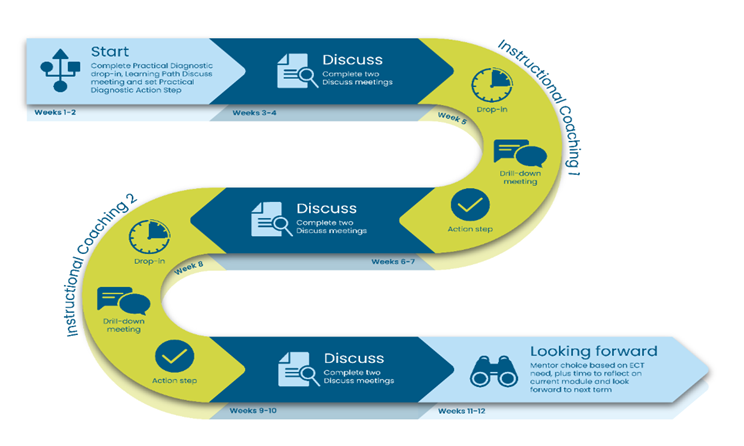
Mentoring sessions will follow the pattern in the model above. This is a suggested best fit approach for mentor weekly meetings in Year 1. There are, of course, opportunities to carry out more drop-ins or discuss meetings as appropriate to ECTs, mentors are welcome to flex the approach, but must ensure that 1 practical diagnostic drop-in (30 mins), 2 drop-ins (15 mins), 2 drill-downs (drop-in feedback meetings) and 6 discuss meetings take place per term.
How to Register